June 2025 - The Source Guy
Categories
All

China reportedly chokes fertiliser supply to India amid trade tensions, puts cropping season at risk

India, which depends on China for 80% of these high-efficiency nutrients, now faces a critical shortfall just ahead of peak cropping season
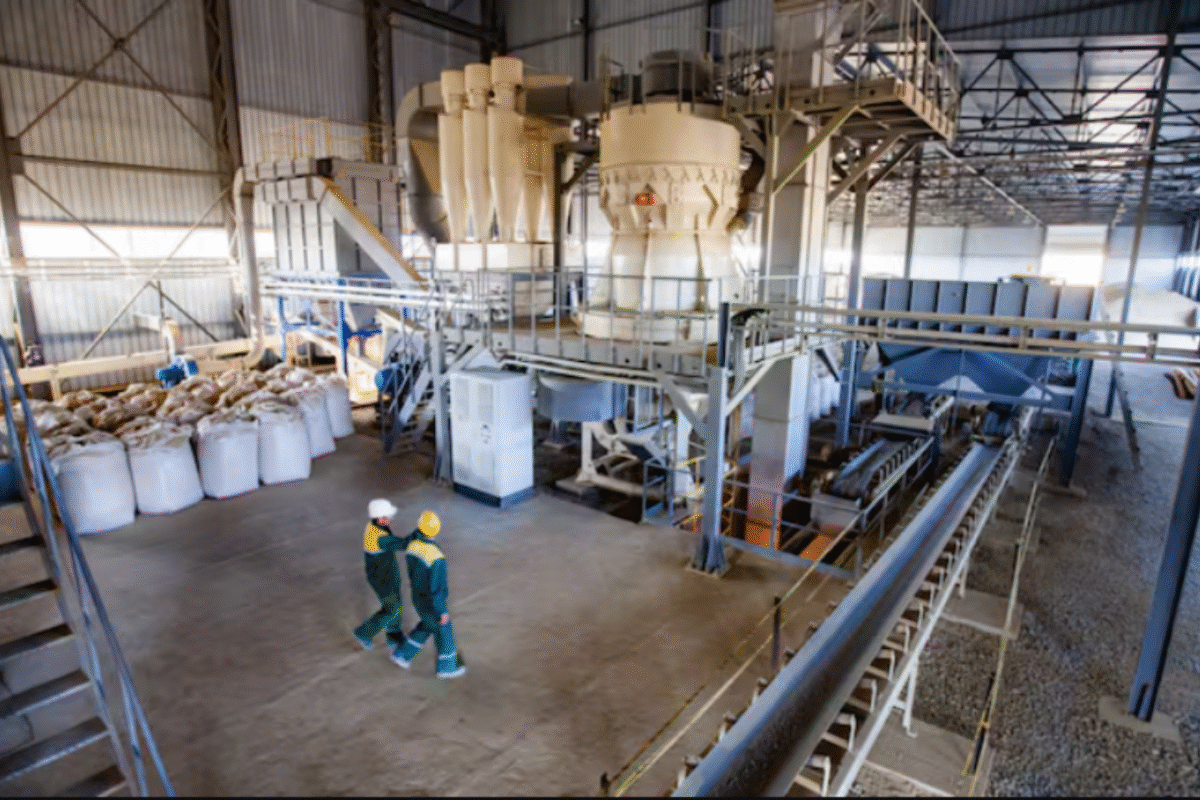
India is facing an unexpected and worrying disruption in its supply of specialty fertilisers, with China quietly halting shipments to the country for over two months, according to a report by the Economic Times. These fertilisers, crucial for boosting yields of high-value crops like fruits and vegetables, are now caught in what seems to be a silent trade war between the two neighbours.

No official ban, but zero inspections

While there is no formal export ban in place, Chinese authorities have effectively blocked exports by not clearing shipments meant for India, said top executives of large importing companies. Economic Times cited industry sources who said shipments from Chinese factories are now subject to tight government inspections, but only for India. Other countries continue to receive fertiliser consignments from China as usual.

“This time it is a complete halt,” said Rajib Chakraborty, president of the Soluble Fertilizer Industry Association (SFIA), in the ET report. “China has been restricting supplies to India for the past 4–5 years, but never like this.”

India’s heavy dependence on China

India imports nearly 80 percent of its specialty fertilisers, such as water-soluble nutrients, liquid foliar feeds, slow- and controlled-release variants, and bio-stimulants, from China. The country typically imports around 150,000 to 160,000 tonnes of these high-efficiency nutrients during the June to December cropping period, according to industry estimates cited by ET.

These fertilisers are not part of India’s subsidised fertiliser programme and are mainly used for high-value crops and precision farming. They help enhance yields, improve soil health, and reduce environmental impact.

Geopolitics behind the squeeze?

This move comes amid deteriorating diplomatic ties between India and China, which have worsened over the past five years due to border tensions and strategic distrust, including India’s scrutiny of Chinese investments and China’s support for Pakistan.

ET pointed out that China has similarly restricted exports of rare earth magnets and other critical materials, often seen as retaliation for trade curbs and tariffs by other nations. The fertiliser squeeze may well be part of this pattern.

Domestic manufacturing still not ready

While demand for specialty fertilisers is rising sharply in India, the country still lacks domestic manufacturing capacity to meet it. So far, volumes have been too low to make local production viable. However, that may soon change.

“Specialty fertilisers are now replacing primary fertilisers, increasing their consumption,” Chakraborty said. As a result, interest in setting up manufacturing units in India is growing, he added.

Companies like Deepak Fertilisers, Paradeep Phosphates, and Nagarjuna Fertilisers are among those operating in this segment.

Can India find new suppliers?

Industry experts told Economic Times that India could potentially turn to Jordan or Europe for alternative supplies. But time is of the essence.

“Landing these fertilisers in time for the cropping season is the main challenge,” a senior official from a global fertiliser company told ET.

Categories
All

Tortuous India-US trade talks run into New Delhi’s red lines

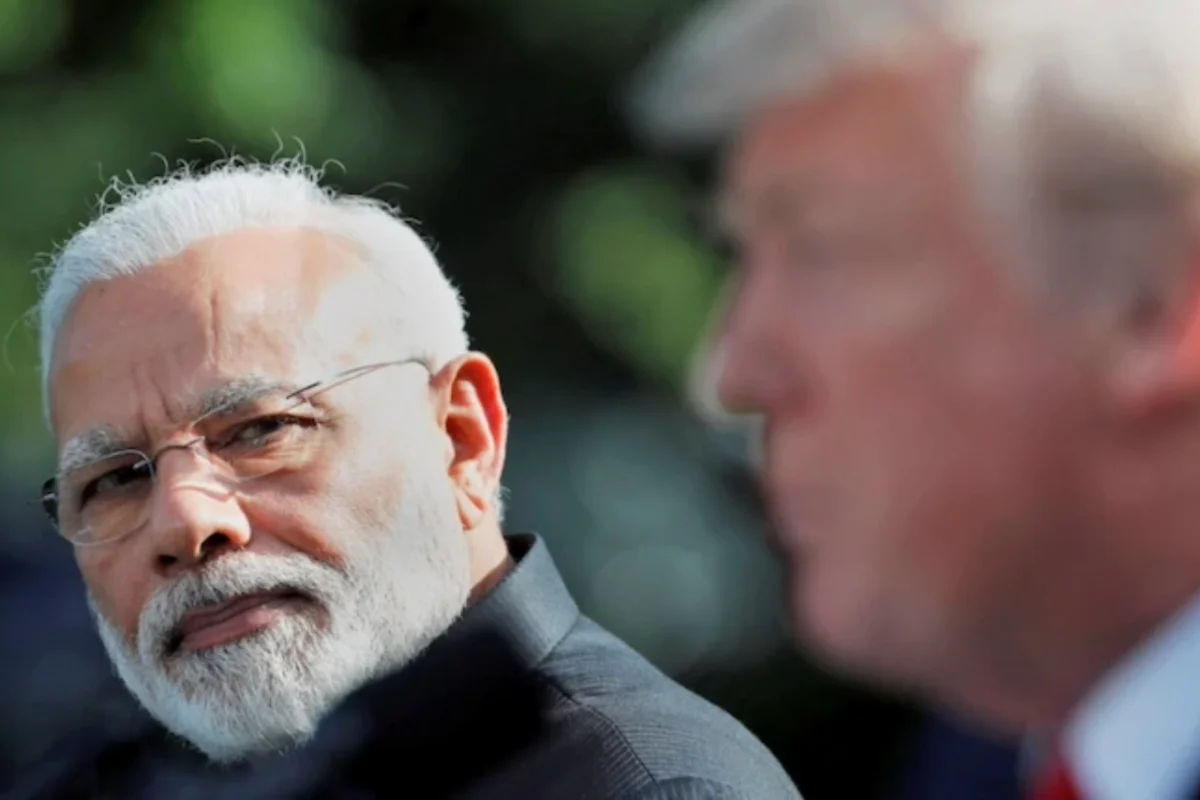
Recent trade talks between India and the United States have become politically charged. The US seeks a deal that would showcase its “America First” agenda, including demands on data flows, patents, and market access for genetically modified food.

India, under Prime Minister Modi’s third term, is pushing back firmly to protect its regulatory space, especially on digital sovereignty, public health, and agricultural livelihoods.

Where the Delhi round left things

The two sides aim to reach a limited agreement by early autumn, ahead of a potential reimposition of US tariffs after July 9. However, substantial differences remain, and India is insisting on review clauses to account for the unpredictable shifts in US trade policy.

Pressure at home—and abroad

Domestic resistance has hardened. Some domestic groups warn that concessions on data or agriculture could hollow out India’s digital public infrastructure and jeopardise food security. At the same time, the global context feels almost war-like: the US is still sparring with China despite a fragile June tariff truce that only trims average duties to about 30 per cent. That volatility reinforces India’s insistence on clauses that can be revisited if Washington’s tariff mood swings again.

A contrasting chapter with Europe

While the US track crawls, the India-EU Free Trade Agreement (revived in 2022 after an eight-year freeze) has gained momentum. In mid-May, the 11th negotiation round closed five chapters, including customs facilitation and intellectual property, and External Affairs Minister S. Jaishankar now calls a complete deal by end-2025 “feasible.”

Prime Minister Modi echoed that optimism in Cyprus on 16th June, pitching the FTA as the economic spine of the planned India–Middle East–Europe Corridor.

Sticking points remain familiar: Brussels wants steeper cuts on wine and automobile duties and firm dairy quotas; Delhi seeks more unrestricted movement for services professionals and safeguards that sustainability rules will not morph into disguised protectionism. Negotiators say the EU is at least willing to discuss phased timelines and recognise Indian geographical indications— flexibility that India highlights when asked why it is progressing more cautiously in talks with the US .

India’s emerging playbook

Viewed together, the two tracks illuminate New Delhi’s new trade doctrine:

1. Credible exit: Having already walked away from RCEP and slow-rolled a UK mini-deal, India can plausibly threaten to leave the table, however we are constrained for geopolitical and trade reasons (critical minerals, AI, Semiconductor technologies) at engaging with the West for trade, defence and security reasons.

2. Issue-by-issue calibration: Delhi now ties concessions to geopolitical context—more flexibility with Europe and Gulf partners building “friend-shored” supply chains; more caution with Washington, where tariff policy changes overnight.

3. Sovereignty first: Whether on data, patents or dispute settlement, negotiators start from the premise that policy space is a strategic asset, not a bargaining chip.

What an India-US mini-deal may look like

If a July sprint succeeds, expect something deliberately narrow: a partial rollback of US steel-and-aluminium duties, modest tariff cuts on Harley-Davidsons and select farm lines, restoration of India’s Generalised System of Preferences benefits, and a review clause that lets both capitals revisit flash points after the 2026 US mid-terms. Anything deeper—data flows, ISDS or big-ticket farm access—looks unlikely for the time being.

The bigger picture

The atmosphere of economic confrontation—tariffs deployed like missiles, supply chains rerouted around real wars in Ukraine and the Red Sea, and rival tech blocs hardening—means trade policy now bleeds into security policy. For India, mastering this harsher terrain is no longer optional. Whether it signs a breakthrough with Washington, delivers a landmark treaty with Brussels, or chooses strategic delay, New Delhi has made it clear: the era of quick, optics-driven trade deals is over; cautious, sovereignty-anchored engagement is here to stay.

Categories
All

A jumbo cut and all accoutrements to meet growth aspirations

We started this morning with a discussion on how predictable monetary policy has become in current times and were soon reminded of the might of a Central Bank in guiding policy discourse. RBI, with its big, bold decisions today, has elevated policy deliberations towards conditions required for the aspirational growth path of the Indian economy despite prevailing global uncertainties.

The Governor Sanjay Malhotra highlighted the strength, stability, and opportunity that the Indian economy presents in what can best be described as a chaotic global backdrop.  He not only emphasized on strong balance sheets of all major economic agents- corporates, banks, households, government, and the external sector, but also underlined stability on all fronts– price, financial, and political- as key strengths of the economy in form of policy and economic certainty.

With a surprise jumbo-sized rate cut of 50 basis points (bps) along with the lowering of CRR by 100 bps, MPC has front-loaded monetary policy support to stimulate domestic demand and growth. This also marks reduction of policy repo rate by a cumulative 100 bps in quick succession since February 2025.

The inflation level in the economy has softened significantly over the last six months. With signs of a broad-based moderation in key commodities, both near-term and medium-term outlook for inflation remain comfortable as well. In fact, RBI has lowered its full year inflation projection by 30 bps to 3.7%, below the target rate of 4%. Lower inflationary conditions provide a window of policy space to support growth, and RBI has grabbed the opportunity to stimulate domestic private consumption and investment.

In the current juncture, frontloading a surprise jumbo-sized rate cut can prove to be a strong signalling mechanism. As the global environment continues to remain uncertain, Indian policymakers have been focused on protecting domestic growth momentum. To that extent, price stability, policy certainties, lower interest rates, and easy financial conditions together provide congenial conditions for domestic consumption, investment, and overall economic activities.

Along with other positive surprises on the growth side, namely, abating credit risk on unsecured loans, reduction in reciprocal tariffs by U.S., FTAs with key global economies etc. should help keep the base case growth expectations supported, limit any potential downside from global developments, and possibly aid an upside to growth momentum as these conditions find their way through consumption and credit demand in the economy.

An all-out dovish tone was marred by a quick reversal of monetary policy stance back to neutral, indicating limited policy space ahead to cut interest rates further. While the messaging remained growth supportive, we are unlikely to see further rate cuts in the current calendar year, unless massive growth drags emerge to threaten the base case outlook. With a data dependent approach, the next couple of MPC meetings are likely to focus on rate transmission and credit demand trends.

Most importantly, cutting CRR at a time when financial system liquidity is already in a surplus indicates a clear bias to use policy levers to move interest rates in the economy structurally lower and boost credit demand as domestic consumption grows in tandem with aspirational growth trajectory for the economy.