July 2025 - The Source Guy
Categories
All

India set to lead global creative economy with AI-driven innovation: I&B Secretary Sanjay Jaju

Startups can register and apply for the ‘Kalaa Setu’ and the ‘Bhasha Setu’ challenges through the WAVEX portal

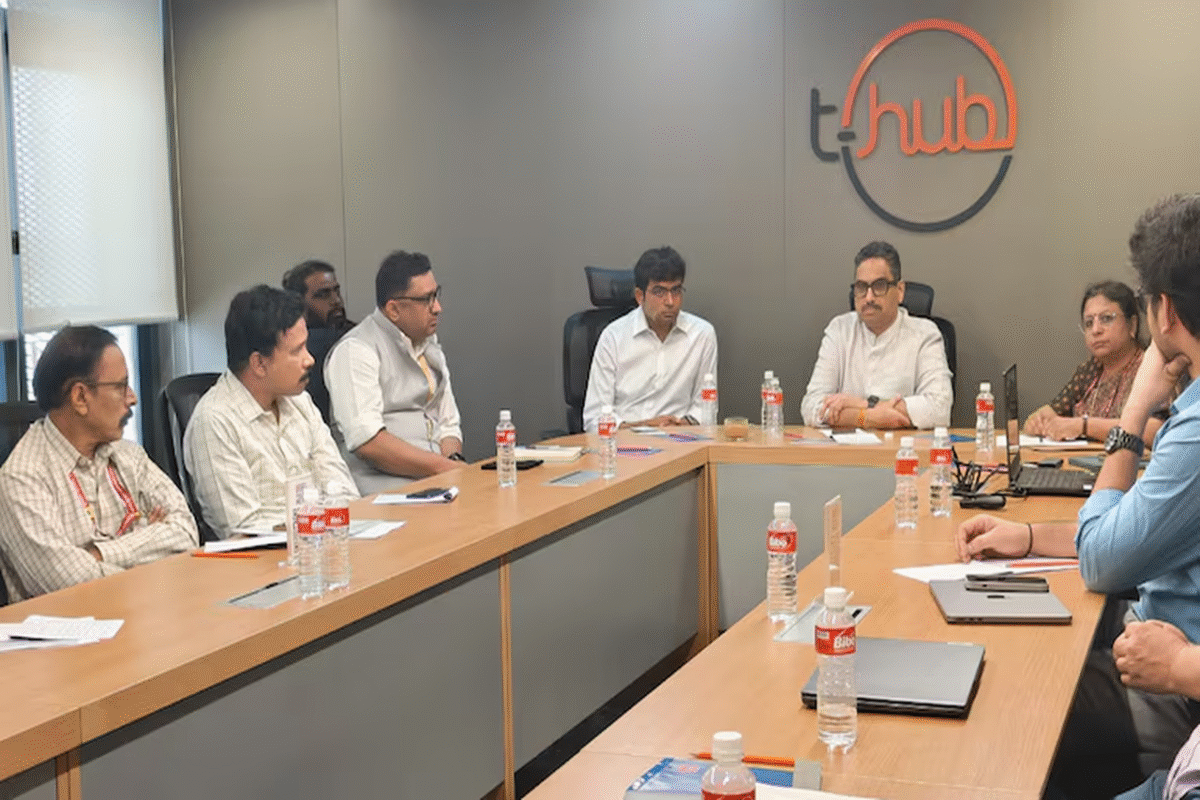
The Ministry of Information and Broadcasting on Thursday unveiled an initiative designed to help adopt AI-based solutions that can help ‘bridge linguistic divides’. As part of the initiative, Secretary of Ministry of Information & Broadcasting – Sanjay Jaju spearheaded discussions with technology innovators and startup incubators during a meeting at T-Hub in Hyderabad, outlining the government’s commitment to developing indigenous solutions that reflect India’s cultural complexity.

He held a meeting with incubators and startups from across the country, working on AI/ML-based technology solutions at the T-Hub in Hyderabad today.

Apart from the CEO of T-Hub and the startups being incubated at T Hub, participants included representatives of IIT Hyderabad, Centres of Excellence of NITs and Engineering institutions with active innovation cells.

Jaju said that, in line with the vision of Prime Minister Narendra Modi to encourage creator economy of the country, the Ministry of Information & Broadcasting has set up the WaveX Startup Accelerator Platform. He further informed that the platform has launched ‘Kalaa Setu’ and the ‘Bhasha Setu’ challenges which would be significant in building a future-ready digital ecosystem.

He urged AI startups to participate in the challenges and develop indigenous, scalable solutions that reflect the linguistic and cultural diversity of the nation.

An official release informed that, as part of the initiative, startups can register and apply for the ‘Kalaa Setu’ and the ‘Bhasha Setu’ challenges through the WAVEX portal at https://wavex.wavesbazaar.com.
The technical requirements and other details for the challenges can be accessed from the WaveX portal, it added.

The release stated that shortlisted teams will present their solutions before a national jury in New Delhi, with the winner receiving an MoU for full-scale development, pilot support with AIR, DD, and PIB, and incubation under the WAVEX Innovation Platform.

What is WaveX?

WaveX is a dedicated startup accelerator platform launched under the Ministry of Information & Broadcasting’s WAVES initiative, aimed at nurturing innovation in the media, entertainment, and language technology sectors.

At the WAVES Summit held in Mumbai in May 2025, WaveX provided pitching opportunities to over 30 promising startups, enabling direct engagement with government agencies, investors, and industry leaders.
Categories
All

India puts an end to 100% waiver on inter-state transmission charges for solar and wind projects

The Indian government on July 1 put an end to a 100 percent waiver on inter-state transmission (ISTS) charges for solar and wind projects. The move, according to officials of the Ministry of New and Renewable Energy (MNRE), is aimed at ensuring renewable energy developers do not delay and commission their projects on time.

ISTS charges are fees that are charged by developers to discoms to transmit electricity from one state to another.

As per the government’s policy, renewable energy developers who are able to complete their projects on or before June 30 next year (2026), will be offered a 75 percent waiver in ISTS charges instead of 100 percent for 25 years. Those who commission their projects by June 30, 2028 will be given a 25 percent waiver in ISTS charges for the same duration. However, projects which remain incomplete beyond June 20, 2028, will not be offered any waiver in ISTS charges.

To be sure, any renewable energy project which was completed by June 30 this year (2025) is being offered a 100 percent waiver in ISTS charges for 25 years. This provision is not going to be revoked for completed projects, MNRE officials told Moneycontrol.

The waiver of ISTS charges is crucial for India’s renewable energy sector as it significantly reduces the cost of transmitting electricity across state lines, making renewable energy projects more financially viable and competitive. This waiver encourages the development of large-scale renewable energy projects, particularly solar and wind, by removing a major cost barrier. It also supports India’s ambitious renewable energy targets by incentivizing the growth of the sector.

A section of the industry expressed concerns over the discontinuation of 100 percent waiver of ISTS charges for projects commissioned beyond June 30, 2025 stating that it could lead to increased tariffs of solar and wind power. However, MNRE officials said the industry is still being offered incentives.

“The stakeholders need to understand that the scheme of waiving off ISTS charges has not been discontinued. The waivers are being gradually phased out from 100 percent to 75 percent to 25 percent until June 2028. We cannot keep giving 100 percent waiver for an endless period of time. The industry has to ultimately stand on its own feet,” a senior MNRE official said.

“Solar and wind projects have received support from the government for long, it is now time to boost other aspects of energy transition such as battery energy storage and pumped hydro for which we are now offering 100 percent ISTS waivers for 25 years,” the official added.

The Indian government on June 10 announced a viability gap funding (VGF) worth Rs 5,400 crore for developing 30 gigawatt hour (GWh) of new battery energy storage systems (BESS) to ensure round-the-clock renewable energy capacities in the country.